Escape, home, and belonging
American RustEscape, home, and belonging form a conflict between the life a person hopes to make elsewhere and the ties, duties, and material limits that keep drawing that person back. For Isaac English, departure begins as a concrete plan to reach California, but his family’s precarious circumstances and his attachment to Buell complicate the idea that leaving is freedom. Lee English has found a place where she belongs beyond the Valley, yet returning home makes clear that distance has not erased her responsibilities. Around them, the decline of the steel economy turns staying and leaving alike into choices made under pressure.
A Home Marked by Decline
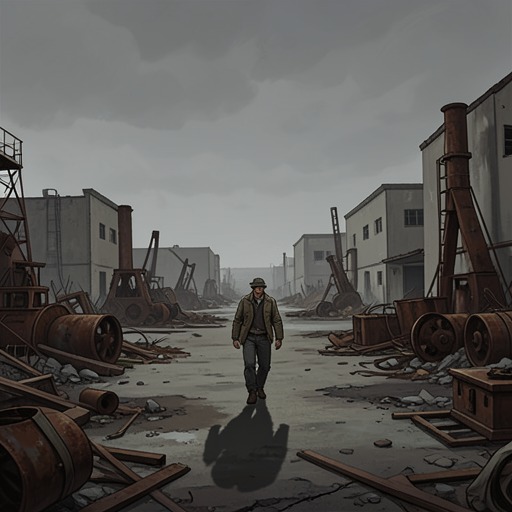
Buell is at once a recognizable home and a landscape altered by economic loss. From an overlook, Isaac sees green hills and forest around the town, but the former steel mill stands partly dismantled and overgrown. Deer and coyotes cross its grounds; human visitors are scarce. The town itself retains white houses, churches, an Orthodox cathedral, and historic stone buildings, but much of downtown is boarded or abandoned. The contrast makes home more than a private dwelling: it is a whole civic world whose old signs of prosperity remain visible alongside its deterioration. The change has a long industrial history. The Valley had been a center of steel production, but by the time Isaac and Billy Poe were born, the region had lost 150,000 jobs, leaving many towns unable to afford basic services. The mill closures also damaged the industries that depended on steel. The consequences reached into family life: Grace Poe recalls layoffs ending her education, the loss of jobs and homes around her, and her family’s reliance on food-bank provisions and poached deer. The foreclosure moratorium helped her family keep its trailer, but keeping a home did not restore the security or prospects that had once made staying seem straightforward. The decline is not presented simply as the failure of individuals to work hard or plan well. In Henry English’s reflections, Penn Steel’s prolonged failure to invest in its factories is part of a wider pattern of industrial neglect, contrasted with continuing investment in plants elsewhere. At the same time, the police confront shrinking budgets, deteriorating infrastructure, and social problems that law enforcement alone cannot resolve. Home is therefore shaped by economic and institutional conditions as well as by affection and memory.
Isaac’s Project of Leaving
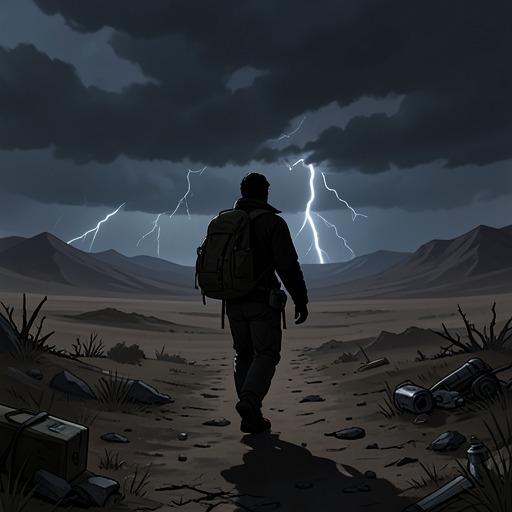
Isaac has been planning his departure for a month. He takes four thousand dollars from Henry’s desk and considers a route along the river toward Pittsburgh, where he could board a freight train and continue west to California. He imagines settling in a warmer climate, establishing residency, and applying to study astrophysics. The plan has ambition and specificity, but it also carries uncertainty: while thinking of his sister’s move and his own future, he questions whether the scientific career he pictures still makes sense. He wonders whether Billy Poe might join him, then doubts that he will. The landscape gives this escape route a local shape. Isaac intends to follow the railway beside the river; the tracks offer a way out because they connect Buell to Pittsburgh and beyond. Before the journey becomes real, he walks through woods he knows closely, carrying notebooks filled largely with drawings of birds and other animals. He values the natural world and the concentration it affords him. Later, moving through the abandoned mill and onto the narrow railbed, he describes himself as beginning the journey in earnest, alone and bound for California. The abandoned industrial site is both a remnant of home and the threshold from which he tries to leave it. Yet Isaac’s departure is not detached from home. He thinks of his father before the accident, when Henry was strong enough to lift him, and of Lee, who has made a new life after leaving. He also recognizes that Henry and Lee have their own accounts of what has happened in the family. His imagined destination offers distance, but the decision to go is entangled with guilt, family strain, and questions about what he owes the people left behind.
Leaving, Returning, and Unequal Choices
Lee’s life makes the possibilities and costs of departure especially clear. She has gone to Yale and found a sense of belonging that she had not experienced in her childhood in the Valley. After years away, she returns to the English family home and sees Isaac’s isolation, Henry’s dependence, and the demands of arranging care for her father. She knows that her brother’s circumstances and their father’s needs cannot simply be solved by her moving back permanently; she also feels that she has taken a long time to return. Her effort to help is shaped by both affection and the limits of what she can sustain. The prospect of selling the family house makes the economic contrast between home and elsewhere concrete. Lee imagines that a house like it might sell for millions in Boston or Greenwich, while in the southern Mon Valley it might be worth only about forty thousand dollars. Nearby, a neighbor’s house has stood empty for twelve years, and a new highway leading north to Pittsburgh carries almost no traffic. These details show how the same region can be geographically connected to opportunity while remaining economically cut off from it. Leaving may offer a future, but the home left behind cannot be converted into equivalent resources simply by moving elsewhere. Billy Poe’s thoughts about Lee reveal another version of the pull between home and departure. After they have been together, he imagines following her to Connecticut and attending a school there on scholarship. He also recognizes that their past relationship was not the settled partnership he sometimes wishes it had been. He pictures Lee’s life beyond the Valley as belonging to another social world, while he walks home without a working vehicle. His imagined escape is bound up with longing for Lee, but the differences between their circumstances make it more than a simple romantic plan.
Staying Under Pressure
For Grace, staying is not proof that Buell offers a satisfying life. She has worked through layoffs, curtailed schooling, and repeated failures of local employment. She once took a second job at Wendy’s but lasted only a week, and she resists work that would further diminish her sense of dignity. The trailer she and Virgil retain provides shelter, yet foreclosure, low wages, and limited job options constrain their choices. Her account makes staying an economic condition as much as an expression of attachment. Virgil’s experience likewise shows how the loss of work narrows a person’s sense of a future. He is laid off after years at the mill, trains in robotics without finding the jobs he expected, and later takes work at a barge-making plant that also closes. Grace considers the possibility that keeping the trailer has prevented them from starting again elsewhere, but moving requires money, while finding better-paid work may itself require leaving. Men who go to Houston, New Jersey, or Virginia sometimes return; for people without relatives elsewhere, poverty among familiar people can seem preferable to an uncertain life away. The novel thus treats home as a source of connection and as a constraint, without pretending that either side of the choice is cost-free.
Belonging Without Resolution
The novel resists treating escape as a clean break or home as a refuge untouched by history. Buell’s woods and waterways remain vivid to Isaac even as its mill and downtown bear the marks of decline. In spring, Billy sees the land greening and notices woods reclaiming former fields; he can value that beauty while acknowledging that the Valley will never again have the prosperity of its steelmaking years. Nature’s persistence offers a different kind of continuity, not a return to the old economy. Across these lives, belonging is something characters experience, lose, seek, and renegotiate. Isaac’s westward plan, Lee’s education and return, Billy’s imagined pursuit of Lee, and Grace and Virgil’s constrained staying all expose different distances between desire and available choice. The Valley is neither merely a place to escape nor an uncomplicated home to which everyone can return. Its meaning rests in the people and memories that remain, even as economic change makes the future elsewhere appear necessary—and makes leaving emotionally unfinished.